Exosome Therapy
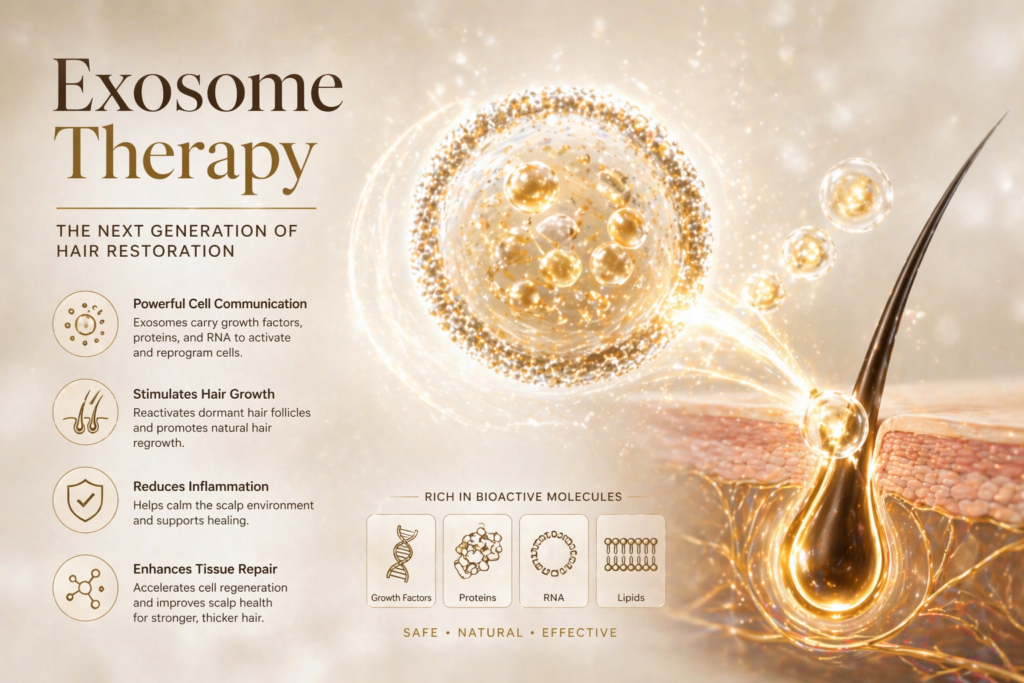
Exosome therapy represents a paradigm shift in 2026, moving beyond cellular transplantation to the precision of molecular signaling. Often described as the “intelligence” behind stem cell therapy, exosomes are not cells themselves but nano-sized extracellular vesicles. They act as sophisticated transport vehicles, carrying a concentrated cargo of growth factors, messenger RNA, and proteins directly to the hair follicles. This “cell-free” approach is particularly valued for its ability to deliver high-potency regenerative signals without the complexities or limitations of live cell treatments.
The biological impact of exosome therapy focuses on three primary regenerative pillars:
- Intracellular Communication: In a thinning scalp, follicles often stall because of “broken” communication lines. Exosomes penetrate the cell membrane of the dermal papilla, delivering genetic instructions that trigger the restart of the hair growth cycle. This effectively “wakes up” follicles that have been dormant for years.
- Vascular Endothelial Support: For a follicle to thrive, it requires a robust blood supply. Exosomes stimulate angiogenesis—the formation of new blood vessels. By increasing the micro-circulation around the hair root, the treatment ensures that oxygen and nutrients are delivered more efficiently to the growing hair shaft.
- Anti-Inflammatory Modulation: Many forms of hair loss are accelerated by chronic micro-inflammation of the scalp. Exosomes contain specific anti-inflammatory cytokines that soothe the follicular environment, effectively stopping the “attack” on the hair roots and preventing further miniaturization.
As a non-surgical intervention, exosome therapy is highly efficient, requiring no donor site or surgical recovery. It bridges the gap between traditional topical treatments and invasive surgery, providing a high-density signaling environment that mimics the body’s most active periods of growth. Whether used to combat early signs of thinning or to maximize the results of a surgical transplant, exosomes offer a level of precision that was previously unattainable in regenerative medicine.
Does Exosome Help with Alopecias?
The effectiveness of exosome therapy across various forms of alopecia lies in its ability to modulate the scalp’s immune response while simultaneously forcing follicles into an active state. Because different types of hair loss have different biological triggers, the role of exosomes shifts to address the specific root cause of each condition.
Androgenetic Alopecia (Pattern Balding)
In cases of genetic thinning, the primary issue is follicle miniaturization caused by DHT. Exosomes intervene by delivering signaling proteins that counteract this shrinkage. They provide the “growth command” that the body is no longer producing naturally, helping to thicken the hair shaft and maintain the follicle’s structural integrity against hormonal stressors.
Alopecia Areata (Autoimmune Hair Loss)
This condition is driven by the body’s immune system attacking the hair follicles. Exosomes are particularly potent here because of their immunomodulatory properties. Instead of just stimulating growth, they work to “calm” the overactive immune response in the localized area, reducing the inflammation that causes hair to fall out in patches and allowing the follicles to recover in a stabilized environment.
Telogen Effluvium (Stress-Related Shedding)
Often triggered by physical or emotional stress, surgery, or nutritional deficiencies, this type of hair loss involves a large number of follicles entering the resting phase simultaneously. Exosome therapy acts as a biological “shortcut” to end this resting phase. By flooding the scalp with regenerative messengers, it pushes these follicles back into the Anagen (growth) phase much faster than they would recover on their own.
Traction Alopecia and Scarring Alopecia
While exosomes cannot regrow hair where the follicle has been completely replaced by scar tissue, they are highly effective in the surrounding “border” areas. By improving tissue elasticity and blood flow, they help preserve the remaining healthy follicles and improve the overall health of the scalp tissue, making it more resilient to further damage.
Is It Possible to Grow Hair from Dead Hair Follicles?
One of the most critical distinctions in hair restoration is the difference between a “dormant” follicle and a “dead” one. To address the question directly: No, it is not biologically possible to grow hair from a truly dead follicle. Once a hair follicle has undergone complete fibrosis—meaning it has been replaced by scar tissue and the blood supply has been severed—it no longer contains the living matrix required to produce a hair shaft.
However, the confusion often lies in what a patient perceives as “dead” versus what is actually “miniaturized.”
Dormancy vs. Death: The Window of Opportunity
In many cases of advanced thinning, the scalp may appear smooth and bald, but beneath the surface, the follicles are still alive; they are simply in a state of extreme miniaturization. In this state, the follicle produces hair so thin, short, and colorless (vellus hair) that it is invisible to the naked eye.
- The Regenerative Limit: As long as the follicle is miniaturized but not fibrotic, advanced treatments like Exosomes or Stem Cells can potentially “rescue” it by providing the signals needed to reverse the shrinking process.
- The Point of No Return: Once a follicle has stopped producing even vellus hair for several years, the biological “pocket” eventually closes. At this stage, no amount of chemical or biological stimulation can restart growth because the cellular machinery is gone.
The Role of Transplantation in “Dead” Zones
When follicles are truly dead, the only solution is Hair Transplantation. Since you cannot revive dead tissue, the strategy shifts to redistribution. By taking healthy, “immortal” follicles from the donor area and physically moving them into the bald (dead) zones, you are not reviving the old follicles but replacing them with new, productive ones.
The Diagnostic Importance
This is why high-resolution scalp analysis is vital. Using specialized cameras, clinicians can determine if a “bald” patch contains microscopic miniaturized hairs. If those tiny hairs are present, regenerative therapies offer a chance at non-surgical restoration. If the area is completely devoid of follicular openings, surgery becomes the only viable path to regaining coverage.
Is Exosome Therapy Safe?
Exosome therapy is exceptionally safe because it is a cell free treatment. Since it utilizes only signaling vesicles rather than live cells or foreign DNA the risk of an immune rejection is virtually non existent. Medical grade exosomes are purified in sterile laboratory environments to ensure they are free from pathogens and contaminants.
Because the procedure is non invasive and requires no surgical extraction from the patient the recovery is immediate. The signaling proteins are naturally recognized by the human body which makes the treatment highly biocompatible. Most patients only experience minor and temporary redness at the injection site that fades within hours.
Is Exosome Therapy FDA Approved?
The regulatory status of Exosome therapy in 2026 requires a clear distinction between the product and its clinical use. Currently, while the FDA has established strict frameworks for human cellular and tissue-based products, Exosomes are not yet “FDA Approved” as a specific drug or standalone treatment for hair loss. Instead, they are regulated under the category of regenerative medicine and biological products.
Most clinics use Exosomes that are manufactured in FDA-registered laboratories. This means the facility and the manufacturing processes meet federal safety and quality standards, but the specific application for hair restoration is often considered an off-label use of a biological product. This is a common occurrence in cutting-edge medicine where the technology moves faster than the multi-year formal approval cycles.
For a patient, the focus should be on the laboratory’s compliance. High-quality Exosome treatments utilize products that have undergone rigorous screening and sterilization protocols to ensure safety. While the “approved” label for hair loss is still pending comprehensive long-term clinical trials, the safety data and biological results have allowed it to become a mainstream offering in advanced regenerative clinics worldwide.
Is Exosome for Hair Permanent?
Exosome therapy is not considered a permanent cure for hair loss but rather a powerful long-term management tool. It effectively reboots the growth cycle for several months or even years. However, since genetic hair loss is a continuous biological process, maintenance sessions are usually required to sustain the increased hair density.
How Many Sessions Are Needed for Exosome?
Most patients see significant results after just one or two sessions of Exosome therapy. In 2026, the high concentration of signaling vesicles usually eliminates the need for the monthly visits required by older treatments. Depending on the level of thinning, a follow-up session every six to twelve months is often sufficient to maintain the growth signals and density.
How Long Does Exosome Therapy Last?
The results of Exosome therapy typically remain visible for 12 to 18 months. While the biological signals provide an immediate boost to the hair growth cycle, the longevity of the effect depends on your individual rate of thinning. Most patients find that a single annual maintenance session is enough to keep the follicles active and prevent the return of miniaturization.
Does Exosome Therapy Hurt?
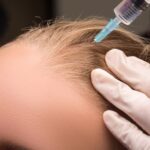
Exosome therapy is a minimally invasive procedure involving very fine needle injections into the scalp. Most patients describe the sensation as a light pinching or pressure rather than actual pain. Because the injections are superficial, the discomfort is brief. Many clinics utilize cooling tools or vibrating devices to distract the nerves, ensuring the experience is as comfortable as possible with no recovery period needed.
How Much Does Exosome Therapy for Hair Cost?
The cost in 2026 is determined by the concentration of the exosomes and the laboratory source. Globally, prices for a high-potency session range from $1,500 to $3,500. In medical hubs like Turkey, you can access the same pharmaceutical-grade quality for $800 to $1,800. While the upfront cost is higher than older methods, the superior results often mean fewer sessions are required annually.
Measuring Pros and Cons of Exosome Therapy
The main benefit is the intense regenerative power without surgery or donor site trauma. It offers a cell-free safety profile and requires zero downtime. The primary disadvantage is that it is not a permanent cure for genetic hair loss; periodic maintenance is necessary to keep follicles active. Furthermore, while highly effective, it represents a larger initial investment compared to basic vitamin injections.
Who Can Be Good Candidates for Exosome Hair Therapy?
Ideal candidates are those experiencing early to mid-stage hair thinning or diffuse hair loss. It is particularly effective for individuals who want to avoid surgery or for women seeking to restore hair volume. If your hair follicles are miniaturized but still alive, you are a prime candidate. It is also an excellent supplementary treatment for hair transplant patients looking to protect their native hair.
How to Prep for Exosome
Preparation is straightforward and focused on scalp health. Avoid blood-thinning medications or supplements like aspirin and high-dose Vitamin E for a few days prior to reduce the risk of minor bruising. Stay hydrated and avoid alcohol 24 hours before your session. Arrive with a clean scalp, but avoid using heavy styling products or fibers that could interfere with the injection process.
Using Finasteride or Minoxidil After Exosome
Exosome therapy works exceptionally well in combination with Finasteride or Minoxidil. While the exosomes provide a powerful regenerative signal, these medications help maintain the results by blocking DHT or maintaining blood flow. Most specialists recommend continuing your routine after a short 24-hour break post-injection to allow the scalp to settle, creating a comprehensive internal and external defense against hair loss.
Why You Shouldn’t Wash Your Hair Before the Session?
While a clean scalp is preferred, you should avoid washing your hair immediately before the session if it involves aggressive scrubbing. Vigorous washing can cause micro-irritation or increase blood flow to the surface, making the scalp more sensitive to the needles. It is best to wash your hair the night before or several hours prior using a gentle shampoo to ensure the area is clean without being inflamed.
Which Is Better: PRP or Exosome?
Exosome therapy is significantly more advanced than PRP. While PRP relies on the quality of your own aging blood, Exosomes provide a standardized, high-concentration dose of growth factors and signaling molecules. Exosomes contain thousands of times more signaling power and do not require a blood draw. For patients seeking the most potent non-surgical intervention, Exosomes are the clear winner in 2026.
Is Exosome Better with PRP?
Combining Exosome therapy with PRP can create a synergistic effect for some patients. The PRP acts as a nutrient-rich scaffold, while the Exosomes deliver the high-level instructions for regeneration. This “hybrid” approach uses the scaffolding properties of your own plasma to support the active messengers in the exosome serum. However, even as a standalone treatment, Exosomes are powerful enough to achieve significant results on their own.